
Coal Conjuring: Summoning Earth's Demons
From Silent Hill to ChatGPT what horror teaches us about climate and consumption.

Coal-belching smokestacks struck at the blackened sky…the age of what poet William Blake famously called the “dark satanic mills” had begun.
Carl Nightengale, Earthopolis
February 14, 1981
Twelve-year-old Todd Domboski screamed for help as he clung to a tree root.
Fifteen-skyscraping-storeys beneath his feet, a poisonous furnace roared in the bowels of the earth with a heat so intense, it baked a layer of mud to Todd’s skin and clothes.
Hearing Todd’s cry for help, his teenage cousin belly-crawled through the smoke and steam until he spotted the top of Todd’s bright, safety-orange hunting hat poking up above ground level. He called to Todd and desperately reached for his cousin’s hand.
Mercifully, Todd was pulled back to the safety of his grandmother’s lawn where he was walking only moments before.
A close call with a well-known entity that lurked beneath this small Pennsylvanian town.

No.
Not that one.
But we’ll get to her, too.
From Silent Hill to the Smurls
There’s some truth to the horrors lurking in Pennsylvania.
You see, Todd Domboski did get swallowed by a hole in his grandmother’s backyard in Centralia, Pennsylvania, and I’ll tell ya, Mel’s Hole doesn’t have shit on Todd’s.
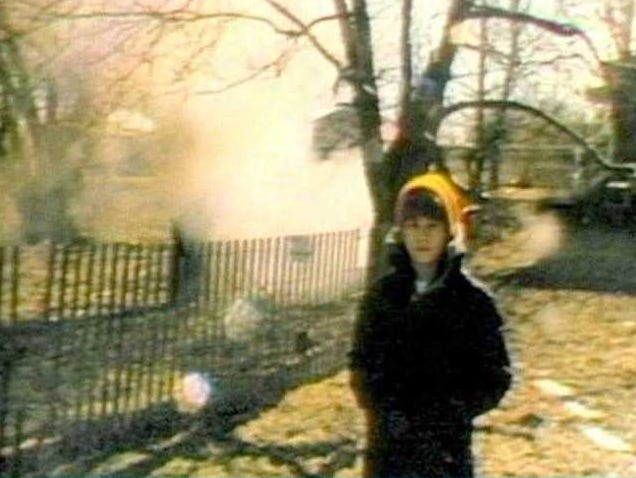
Measured to be over 150 feet deep, with scorching temperatures between 350 and 600F, the hole was filled with toxic fumes and combustion gases that would have killed Todd had his cousin not been there to pull him out.
As urban legend (and it is legend) would have it, Silent Hill, the 1999 blockbuster survival horror game for Sony PlayStation, was based loosely on Centralia and its deadly geology. You can begin to see the parallels, even if the veracity of the backstory’s connection is lacking substance.
A 12-year-old child, nearly killed in his grandmother’s backyard, however, was the final (final, final, final, etc.) straw in a battle between government officials and residents of Centralia. The town was on fire from within, and the Earth was trying to swallow and then incinerate the residents. They needed help, and the fire wasn’t exactly a new problem.
It started almost twenty years prior, in 1962, when Centralia was performing its annual pre-Memorial Day garbage burn. The reason behind the ritual was simple: the garbage pile was too close to the cemetery, and much too unseemly and smelly for any hallowed Memorial Day services that were usually held there.
Thus, burn down some garbage to make Memorial Day more aesthetically pleasing.
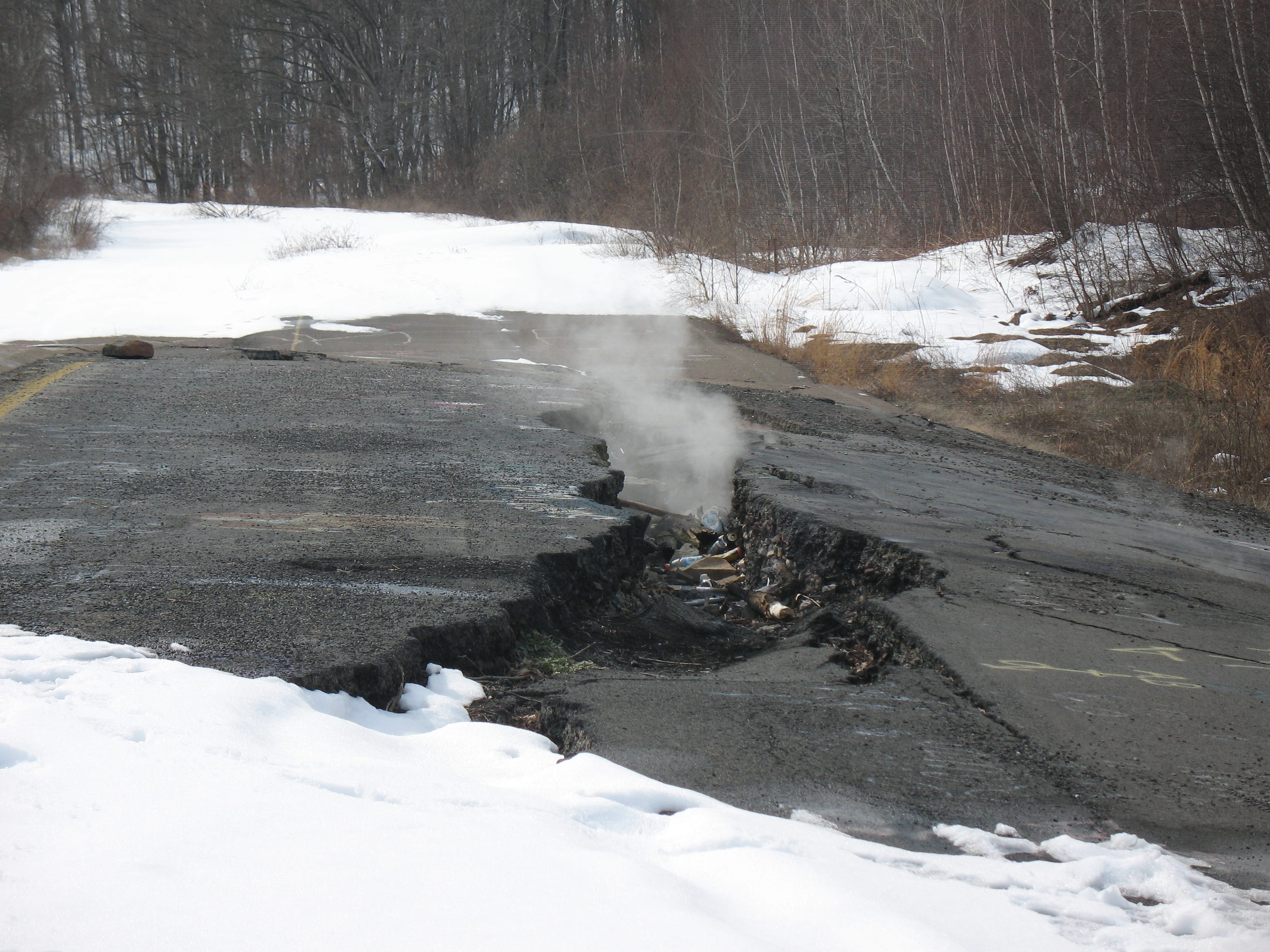
In 1962, however, a few days after the burn, the residents noticed the fire was still smouldering. A few days after that, steam and smoke started seeping from the earthen walls of the garbage pit.
It was soon discovered the fire had worked its way into the coal seam under the garbage pit and was using it for fuel to burn Centralia from the inside. As the fire continued to burn, it became its own unregulated, autonomous mining operation: chewing away at the coal, timber and other materials underground, while at the same time, failing to install any of the supporting beams to prevent collapses. This is just one of the ways you can end up with a fiery earthen maw trying to gulp down a house, bridge, or child.

That same year, not far away in Laurel Run, residents were forced to finally leave after an underground fire of their own.
When a coal cart derailed on a Friday afternoon, miners worked quickly to clean it up before getting some much-needed weekend reprieve. In the fatigue and fog, a miner forgot their lamp hanging on a hook affixed to the tunnel’s wooden support timbers. The lamp lit the timber, and proceeded to burn through the weekend with no workers or watchmen monitoring the mine.
By the time the miners returned on Monday, it was too late.
The fire proceeded to spend decades licking away coal, swallowing homes, and making residents sick, until 1962, when they had government assistance to get out.
After working in dangerous, backbreaking conditions all week, we can’t blame anyone who simply forgot their lantern burning away on a hook. Hell, in 2020, dumbfucks with gender-reveal ‘pyrotechnics’ took a chunk out of a city, a national forest and a firefighter’s life. Coal miners were toiling to earn a living and to make sure the rest of the country’s lights were staying on. Dickheads with disposable incomes and a baby on the way truly have no excuse. Alas, both roads reached similarly destructive outcomes, and were both paved by consumerism, one way or another, like it or not.
The Laurel Run and Centralia fires continue to burn to this day, with an estimated century or more to go in Laurel Run’s case. In terms of coal seam fire-age though, a few centuries is peanuts compared to the oldest: ‘Burning Mountain’, in Australia, which is estimated to have been cooking for over 6,000 years.
That’s like three whole Christianities, lads.
But if “Forever Fires” aren’t scary enough for you, though, hydrocarbons, in all their glory, have darker connections than the Koch Brothers.
They have things that go bump in the night.
Carbon-Conjuring Insidious, Environmental Ghosts
(Why dontcha try and say that three times fast)
Mother Earth and her mysterious forces have long been studied as potential sources for haunting experiences. A meta-study in 2020, discussed the main categories of research literature that covered environmental variables in haunted houses, which included “…embedded (static) cues, lighting levels, air quality, temperature, infrasound and electromagnetic fields” (Dagnall, et. al., 2020).
So what’s happening when a coal fire is burning beneath your feet, and what potential toxins and haunty side effects could we be in for?
The U.S. Department of the Interior, Office of Surface Mining Reclamation and Enforcement has some pretty grim language as it relates to coal seam fire byproducts, which are globally responsible for, “…sending thousands of tons of soot, toxic vapors, and greenhouse gases into the atmosphere, leading to pollution of surface and groundwater, mine subsidence [collapses] as the coal is consumed, and ignition of forest and structural fires.”
Coal Seam Fire Gases
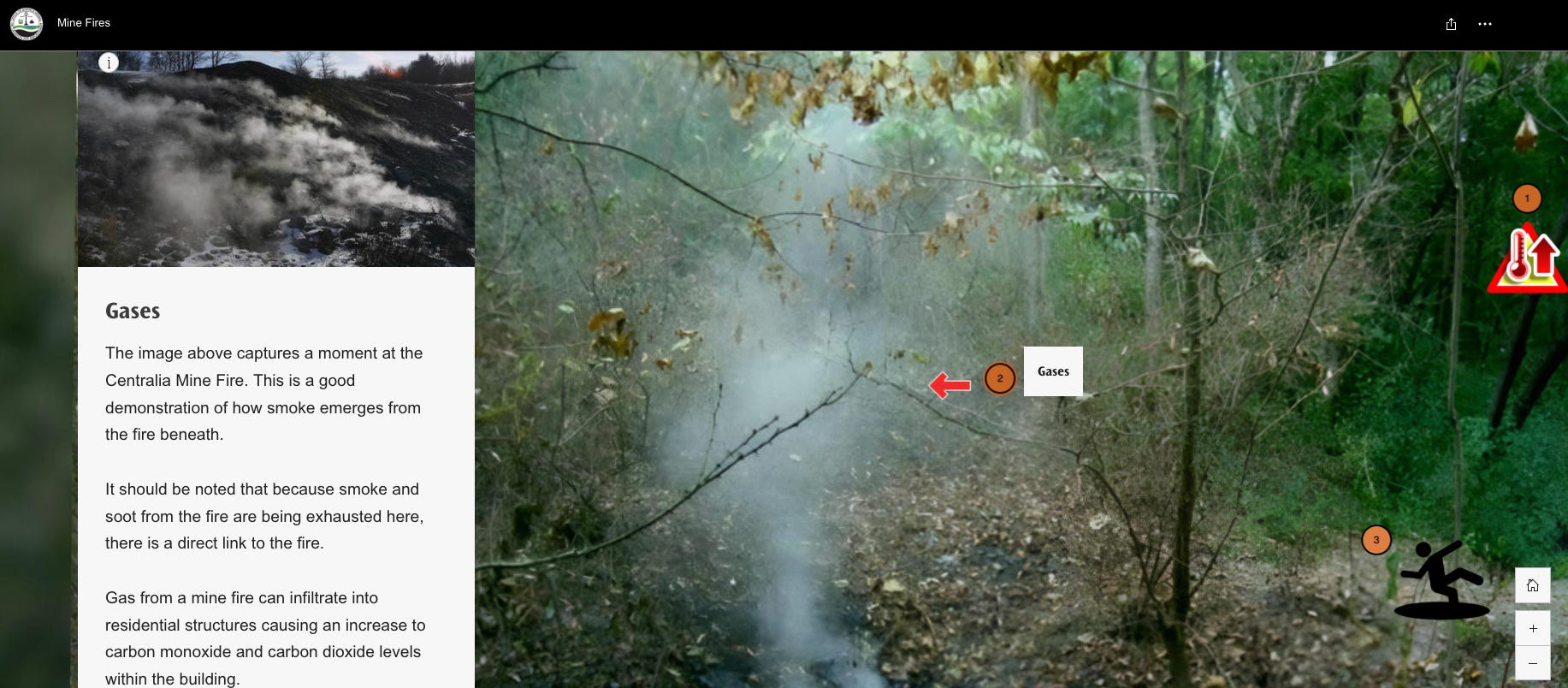
Gas from a mine fire can infiltrate into residential structures, causing an increase in carbon monoxide and carbon dioxide levels within the building. (Shauntelle Cruz)
From the aforementioned meta-analysis on haunted houses, air quality did seem to have a more direct relationship to some haunting experiences. Carbon monoxide, for example, ‘…clearly substantiated in a few reports…’ with case studies that included, “…strange sensations, feelings of listlessness, hearing phantom footsteps, and seeing mysterious figures.”
The Laurel Run and Centralia fires, of course, have all the components that check the toxic boxes in a dangerous fumes list.
In Laurel Run, in particular, residents had also reported glowing blue clouds hovering above the ground at night, called ‘blackdamp’ — a term used to describe high levels of carbon dioxide and low levels of oxygen. The ghostly glow above ground was a sign of deadly combustion below it.
Other ‘damps’ from the coal industry are whitedamp (carbon monoxide), firedamp (methane), and stinkdamp (hydrogen sulphide or H2S). I had never heard H2S called ‘stinkdamp’ but its prevalence in the heavy-oilfields of Saskatchewan and Alberta, Canada where I grew up, meant that most of us in my rural high school took an H2S certification course.
As for mine collapses, it isn’t just fires that can cause subsidence. Revisiting the Smurls haunted timeline before Ed and Lorraine Warren arrived, for example, yields countless stories where Pittston and West Pittston homes were being swallowed up from below with no coal seam fire present.
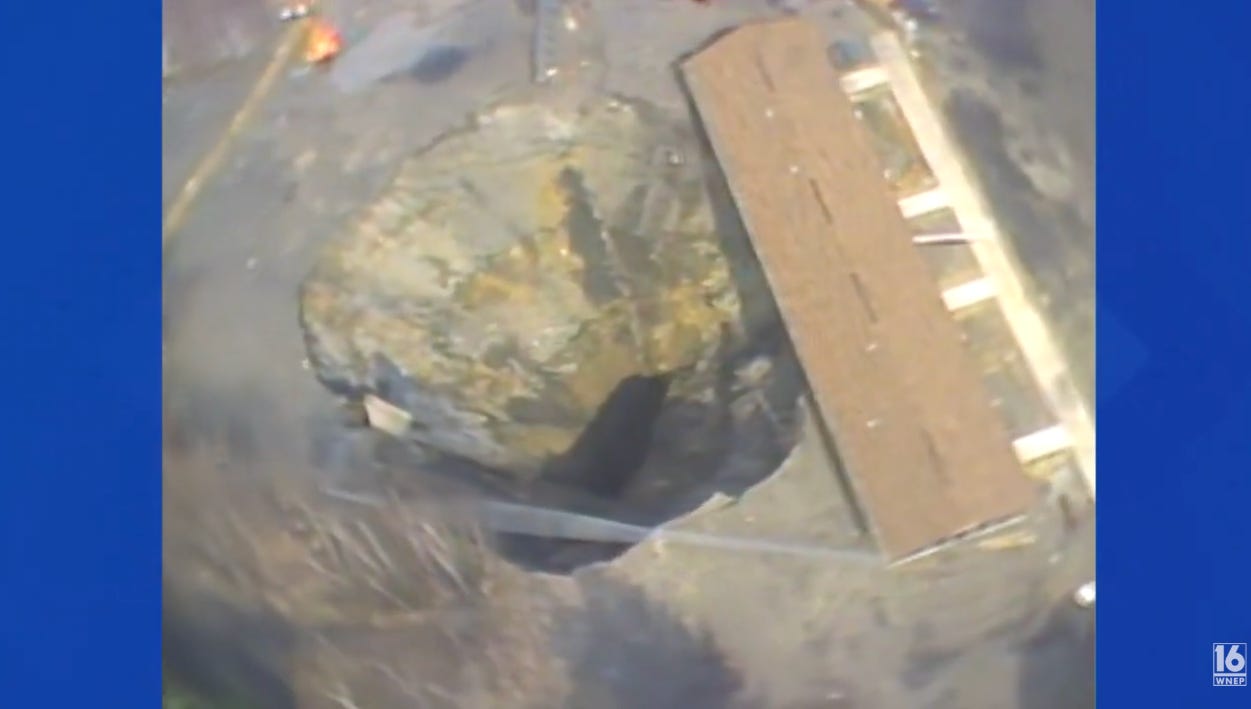
Lord only knows what kinds of fumes and toxic dust these families were inhaling before, during and after these terrifying holes opened. In 2026, we also take for granted that carbon monoxide detectors weren’t a standard household item until long after The Exorcist, Amityville, the Perrons and the Smurls were already thoroughly haunted out the hoo-ha.
In Centralia, the government brought CO-monitoring devices in, but as soon as they would turn them on, the devices would blare a warning. Then they would have to move the device to the next house.
Yet coal and the processes that used it have been widely been mistaken for as being replaced by other hydrocarbons like natural gas or the nuclear option. A common misconception. The nuclear option provides a hint, in fact, when you look at the legendary, Three Mile Island (also in Pennsylvania), and learn that its Unit 1 reactor is going to service Microsoft for the next 20 years.
I’ll tell you now, we don’t have to climb in a Delorean and travel back to Blake’s ‘dark satanic mills’ to see a much deeper relationship we all have with coal consumption and its poltergeists rising from beneath our feet.
Coal is as relevant as ever in the modern age of snakeoil AI.
Old Coal Fuels New Data Centers
As Matteo Wong wrote in The Atlantic earlier this year, “[t]he lifespans of coal plants…are being extended to power new data centers. And the IEA estimates that data-center emissions could more than double by 2030—becoming one of the fastest-growing sources of greenhouse gases in the world.”
That’s right. AI data centers powering a non-profitable technology will help to continue sicken people, kill workers, and swallow our homes and kids whole.
Oh, but it doesn’t stop there, dear ghostbuster. You see, data centers bring their own special demons with them that have an endless thirst for the sacrificial offering of virginal freshwater — one that must be obliged in staggering volumes. The demons also bring bad vibes.
Literally.
“When I go to my room at night, the tonal noise immediately triggers my anxiety,” Donna Gallant, a neighbour to a Google data center in Virginia, told Business Insider.
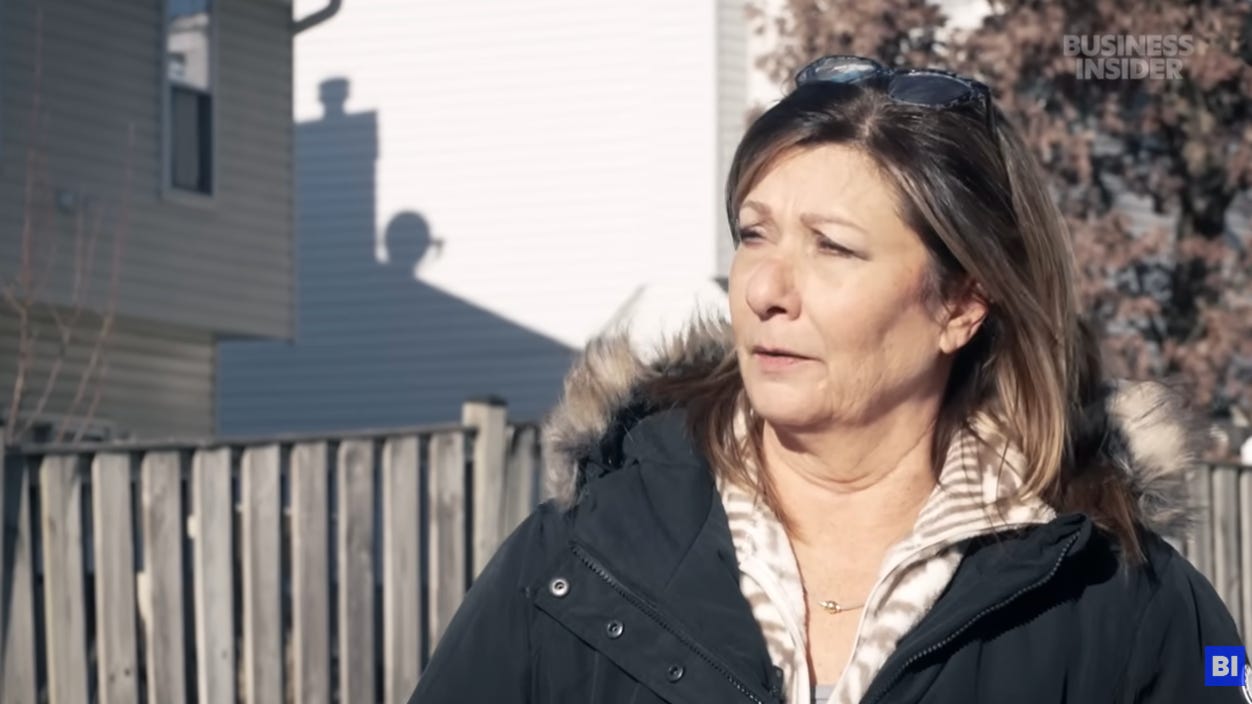
Infrasound, and the associated ‘fear frequency’ (not to be confused with the mythical brown note) is quite real. Living next to data centers could, in fact, create the necessary hums to conjure ghosts all on their own (but not make you shit your pants, at least not right away).
Infrasound is defined as, “...audio frequency energy that falls below the range of normal hearing, typically 20Hz. It can be characterized simplistically as a hum you cannot hear…[there is a prevalence] of both ambient infrasound within the environment (via natural phenomena such as geomagnetic activity, wind, etc.) and man-made infrasound (e.g. aircraft, large machinery, air movement in duct systems).”
But what of its effects? We can turn to an examination of the sound design in the movie Hereditary (2018), by Dr. Beth Kattelman, who teaches us infrasound, “cannot be heard but literally unsettles human beings down to our bones,” adding that, “low-frequency noises have stress related effects on hearers.” Horror movies employ them, so imagine if you literally lived in part of a horror movie’s soundtrack all day and night.
There is additional research that suggests cases of nausea, along with auditory and even visual hallucinations that can come with some infrasound exposure.
With all of this, one would think the ‘scientifically skeptical’ would be having a field day with the massive opportunity that presents itself when a popular issue like climate can meet head on with investigations of the paranormal or unexplained.
One would be wrong to think that.
The Failure of Scientific ‘Skepticism’
The symbolically skeptical seem to lack some rigour in their analysis when it comes to legendary haunts connected to coal, consumption and climate. Instead opting to exude a weird blend of condescension and faux-expertise that would make Carl Sagan weep to witness on the 30th anniversary of his Demon Haunted World.
Take the Bellaire House, in Bellaire, Ohio.
My favourite ghost hunters, Ryan Bergara and Shane Madej, of BuzzFeed and Watcher fame, even paid it a visit in 2018. An important distinction here is that Ryan and Shane in no way hold themselves out as the focal point of genuine skeptical inquiry. They are entertainers, not scientists, not journalists.
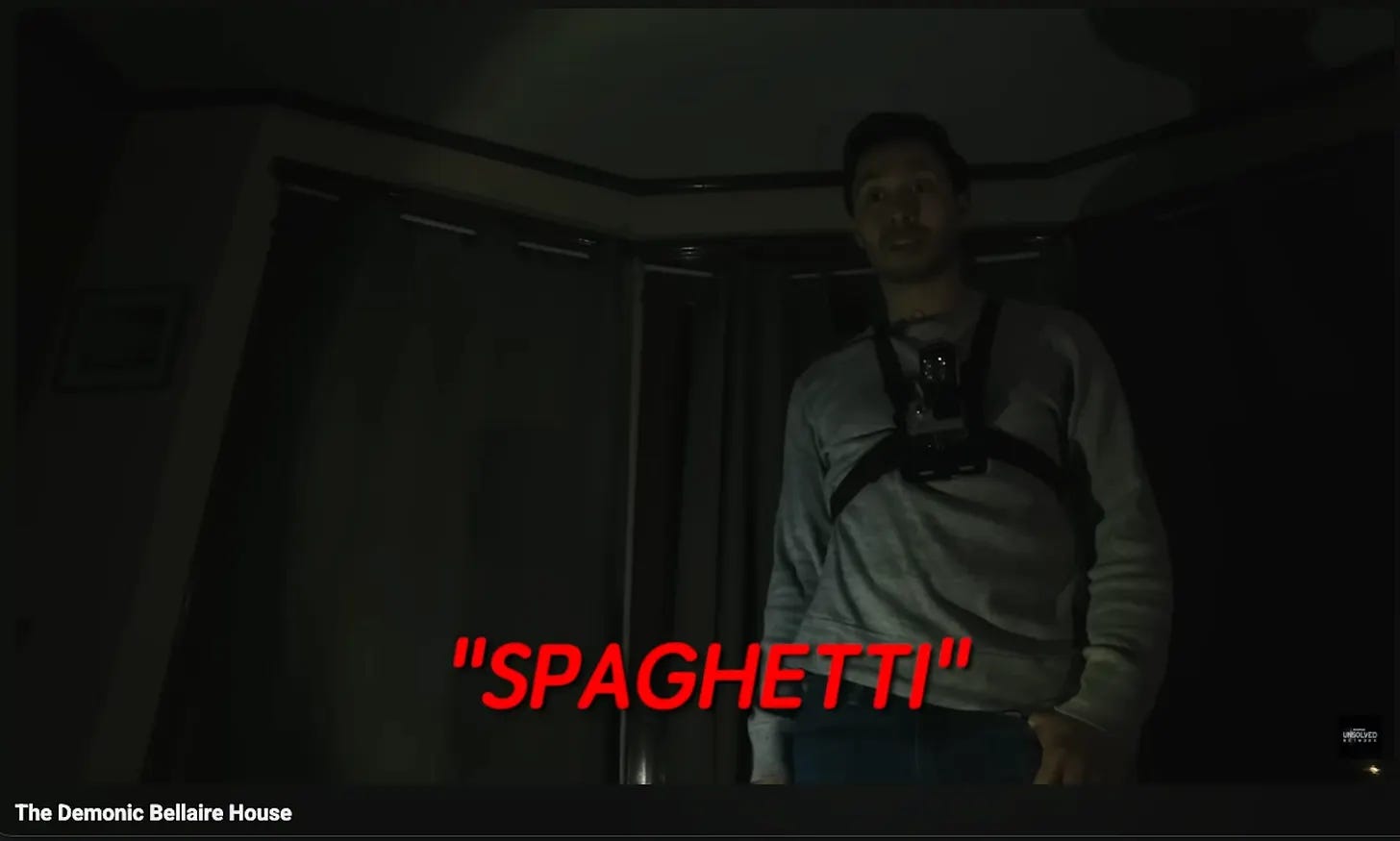
However, the legendary Skeptical Inquirer — one of the guiding lights of scientific skepticism — has their own coverage of the case. And oddly enough? I think it misses the point more than Ryan or Shane ever could.
Part of the haunting lore the Inquirer digs into was a coal mining disaster, with the ghosts of the victims lurking behind: “Several coal cars and lumber had been saturated with oil and set on fire. There were no injuries or fatalities reported, and it was not an explosion. I think this effectively debunks any alleged link between a mine disaster and the house allegedly being haunted.”
Well… based on what we’ve learned so far, I’m not sure I would fully agree.
I am all for fun and debunking, but eau de condescension is a cologne applied by skeptics with alarming volume and frequency while they still seem to miss entire lines of obvious scientific inquiry without a shred of irony.
Yes, it’s funny to joke about ley lines, but what about coal lines like the one the Bellaire House was clearly sitting over?
If you’re a modern ghost hunter, you’re checking GIS and mining maps for hotspots of hallucinatory gases, right?
Right?
And the Smurls?
No spirit box is required to look at Pennsylvanian mining data that shows the Smurl house was perched directly over a coal seam. A little OSINT goes a long way when chasing haunting hypotheses.
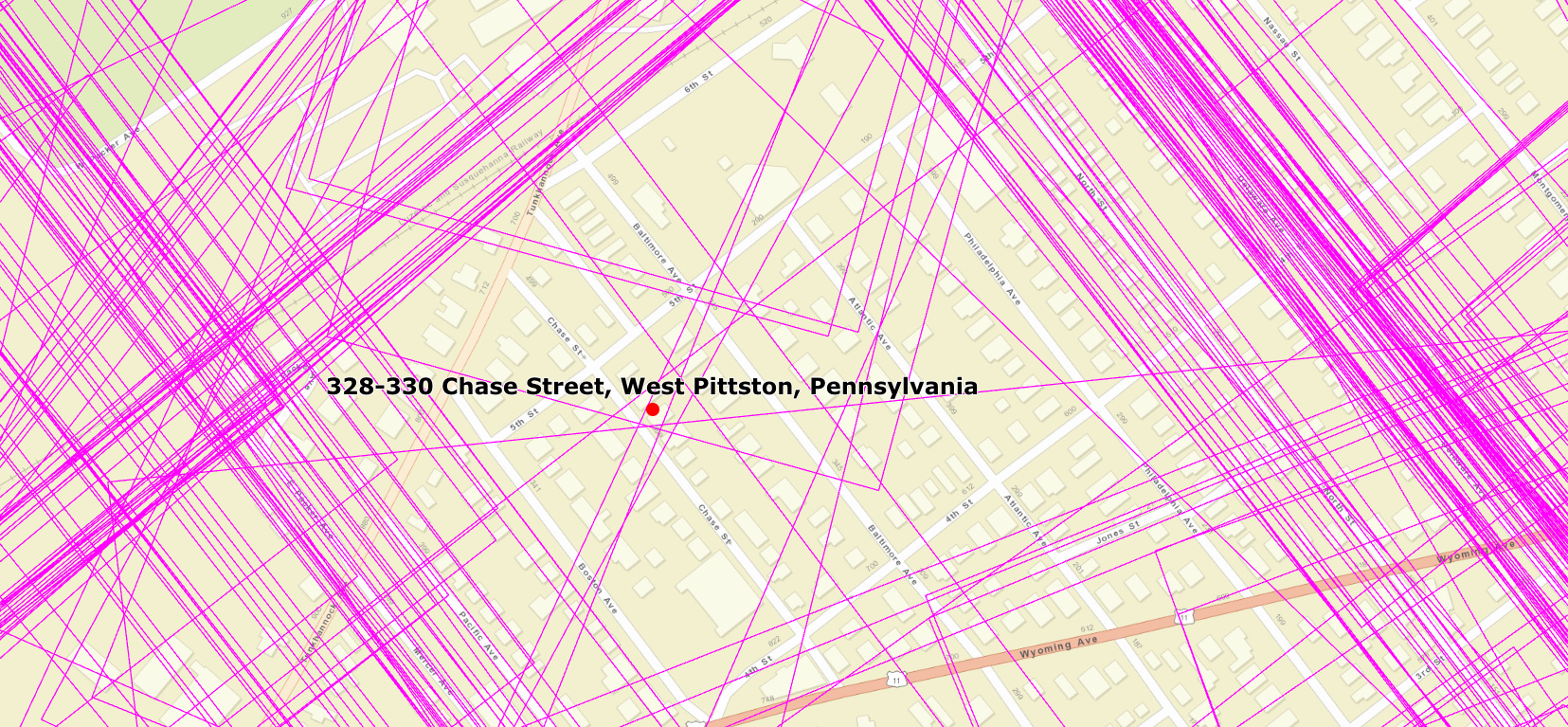
And it’s not just the gassy ‘damps’ that can get us all haunted up to kingdom come either. Water, as we know, can do a lot of damage.
For instance, the only reason the Smurls lived in West Pittston in the first place was because they were relocated after the disastrous flooding brought by Hurricane Agnes in 1972. This backstory is completely ignored by the Skeptical Inquirer when they also analyzed this location in similar form to the Bellaire House in Ohio.
If you thought ceiling-crawling apparitions were terrifying, the NY Times captured the following as it related to the floods that drove the Smurls from their homes:
John Novak's eyes reflect horror as he recalls what he saw when a dike broke at Forty Fort Cemetery on the west bank four miles above Wilkes‐Barre.
The cemetery contained more than 6,000 bodies. It had been receiving the dead since the last decade of the 18th century.
…
Coffins and vaults were spewed from the ground.
“I saw a wave eight to 10 feet high come across the flats, and on it coffins bobbed like surfboards,” Mr. Novak said.
He stared transfixed, he recalled, until the borough siren gave seven blasts, the signal to evacuate the town.
Further reporting told of skeletons, limbs, and other body parts being found on rooftops, front porches and inside basements and cellars that were frequently covered in knee-high mud and muck.
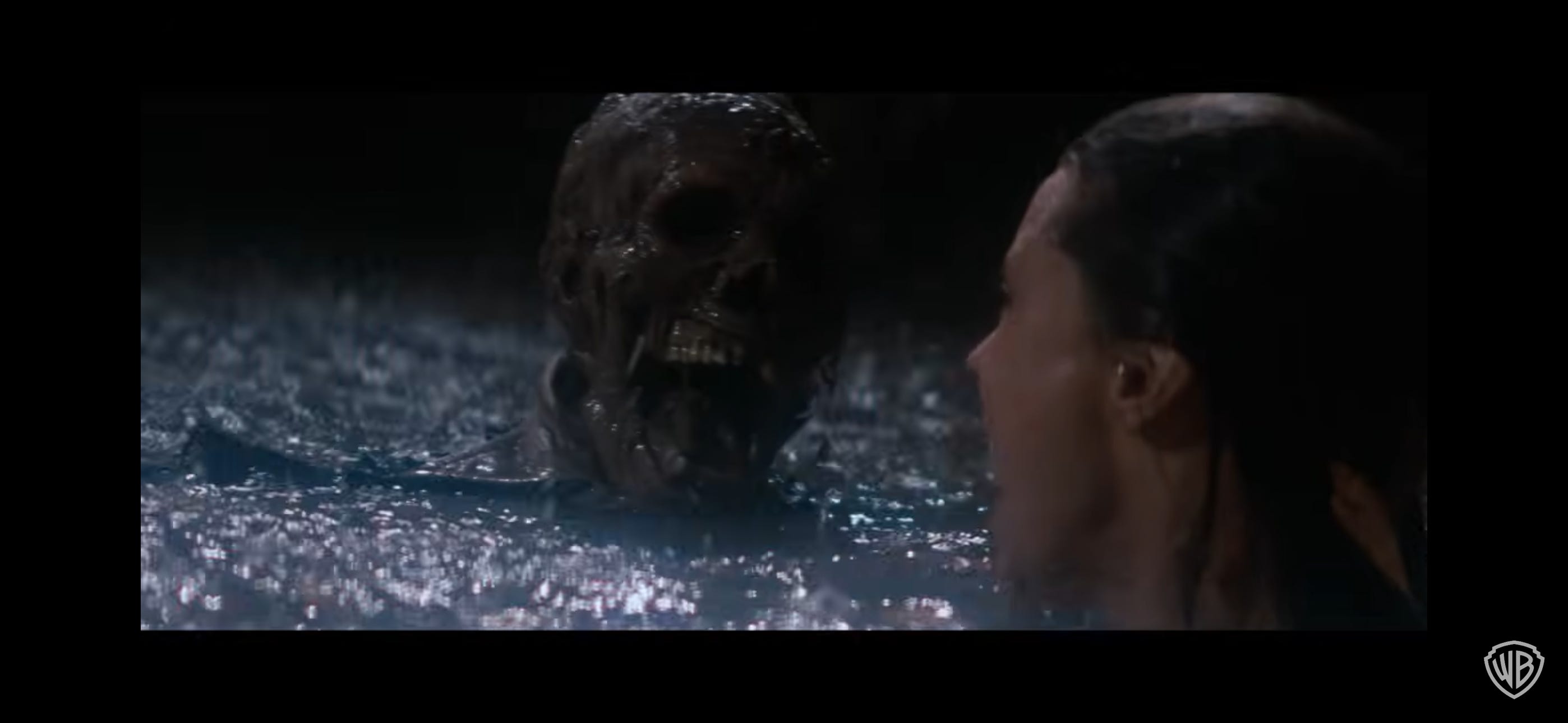
With all of that water and moisture comes water-borne nasties. The same 2020 meta study discusses biotoxins that can be found lurking in our homes, or for example, in your decorative pools outside of your nation’s capital, including, “…molds, dinoflagellates, spirochetes, and blue-green algae,” which can cause symptoms that, “…sometimes parallel the psychological experiences that characterize haunts, e.g. disorientation, mood swings, temperature regulation problems, and tingling.”
Combining the real horrors of a devastating flood with the toxic horrors you might be inhaling from the remnants might actually have a lot to explain for some of our favourite horror “stories”. If only they weren’t true for the residents of these unfortunate places where our own consumption displays its consequences.
If our metaphysical “science skeptics” are going to stand on Sagan, I would suggest, perhaps, that they learn to develop some better hypotheses — and then figure out how to make it relevant to today’s audience.
They’re missing a lot of points of inquiry that could be used both for a deeper understanding of our world, and as a means for positive change. Instead, the skeptics seem more keen on scoring points in a game of condescension no one really asked to play.
Fires, Flooding, Coal, and Conclusions
What I ultimately learned in this journey of horror and history (as I hit publish in the middle of a heatwave and deadly fires) is that each query tapped out to ChatGPT and its ilk, moves a hidden planchette across Earth’s Ouija board, connected directly to a demon that someone else — an Other, by race, or class — has the misfortune of living over top of.
Whenever I save a draft to Substack, I do the same.
We poke the environmental Beezle-bear.
We environmentally launder our clicks and clouds to those that are forced to toil underneath and live over top of the consequences.
Maybe we would all take climate more seriously if we were universally plagued with horrifying apparitions, falling ill from ghostly, glowing clouds in the night, or having our children swallowed by our backyards in greater numbers by simply using one of these technologies.
Oh, I’m sure Mother Earth can get more creative than all the above; in fact, if we continue to light our garbage on fire and shove it down her throat while murderously scraping every ounce of compressed dinosaur shit out of her insides that we can.
This is why science, scientists, history, and historians (and our hot librarians) should never stop giving fresh perspective to “old” facts -- they’re important, they resonate, and they make their way into our folklore, our movies, and our video games. There’s nothing “old” about them, in fact. The dangers of coal, coal seam fires and coal mining are just as relevant today as ever.
Horror borrows from history, science, and academia, then tries to weave it all into a portrait that captures the anxiety of the present moment. Now more than ever, we need to scare the life out of people with the realities of what’s going on with climate. If we continue to let the pale-faced-fuckdroids from Silicon Valley do what they’re doing, we can continue to expect to get the same ugly results and a deepening of human misery with each lunar cycle.
If I’ve learned anything from horror: keep on screwing around with the Entity and the Entity is only going to ratchet up the terror and violence until we get it — or we leave the house.
And we can’t leave the house in this story — the call is coming from inside it, and we’re the ones dialling.
Endnotes
Biddle, Kenny. (2024, October 22). Investigation of the Bellaire House. Skeptical Inquirer. https://skepticalinquirer.org/exclusive/investigation-of-the-bellaire-house/
Bigart, H. (1972, July 30). Wilkes‐Barre Dazed A Month After Flood. https://www.nytimes.com/1972/07/30/archives/wilkesbarre-dazed-a-month-after-flood-dazed-wilkesbarre-struggles.html
Cruz, S. (2024, January 30). Mine Fires. From ArcGIS StoryMaps website: https://storymaps.arcgis.com/stories/b97fba6bf00241628a2e85f8b2a21e29
Dagnall, Neil, et. al. (2020). Things That Go Bump in the Literature: An Environmental Appraisal of "Haunted Houses." Front. Psychol., vol. 11, no. 1328.
Kattelman, Beth (2019). Triggering Fear: Possession and Sound Design in Hereditary. https://kb.osu.edu/server/api/core/bitstreams/61601ea3-2c59-4932-a524-4422daf9f607/content
Wong, M. (2026, March 13). Inside the Dirty, Dystopian World of AI Data Centers. The Atlantic. https://www.theatlantic.com/magazine/2026/04/ai-data-centers-energy-demands/686064/